
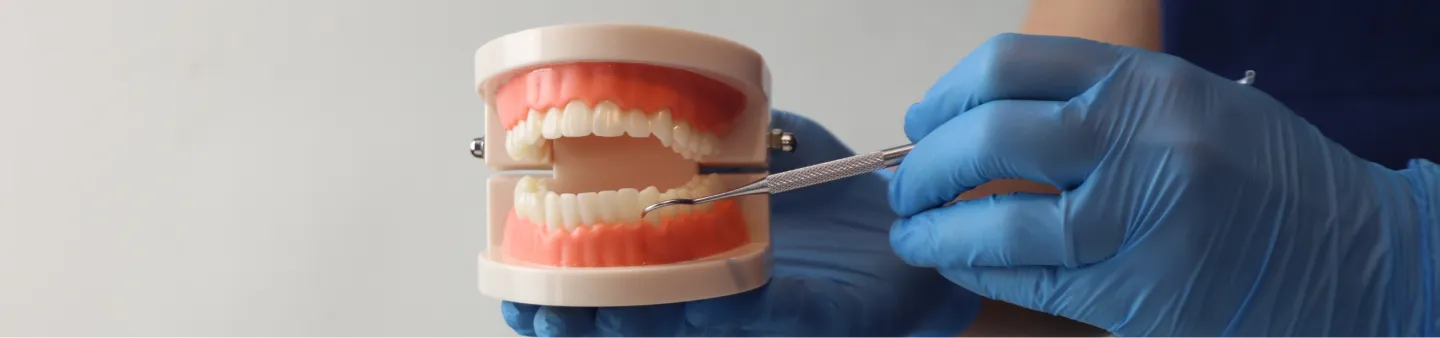
Bone grafting in North Haledon, New Jersey, restores jawbone volume to support dental implants and other treatments. This page outlines what bone grafting involves, when it is recommended, the benefits, healing time, and what to expect so patients can make confident decisions about care.
Bone Grafting Explained
Bone grafting is a minor oral surgery that adds bone or bone-like material to areas of the jaw where bone has thinned or receded. Tooth loss, gum disease, infection, and trauma can all cause the jawbone to shrink over time. When the bone is too soft or narrow, it may not support a dental implant or may weaken nearby teeth. A graft provides a stable framework that encourages your body to grow new bone and strengthen the area.
Graft materials vary. Autograft uses your own bone, usually from the jaw. Allograft comes from a human donor source and is processed for safety. Xenograft often comes from bovine sources. Alloplast is a synthetic option. Each type has specific advantages based on the defect size, location, and timing with other procedures. Bone grafting may be paired with socket preservation after a tooth extraction, a sinus lift in the upper back jaw, ridge augmentation to widen a thin ridge, or repair of periodontal defects before further treatment.
How Bone Grafting Can Help You
Rebuilding bone can be a crucial step in planning for predictable dental implant placement. Added support helps distribute bite forces more evenly and can extend the lifespan of future restorations.
- Improves candidacy for dental implants by restoring adequate bone support.
- Stabilizes adjacent teeth that have lost support due to gum disease.
- Preserves facial shape by slowing the collapse that follows tooth loss.
- Protects an extraction site through socket preservation to reduce shrinkage.
- Supports long-term oral function, including chewing comfort and clarity of speech.
Have Questions? We're Here to Help.
Our team is happy to discuss your options and create a plan tailored to your needs.
The Bone Grafting Process
The process begins with an evaluation, which may include digital X-rays and 3D imaging to measure bone height and width. A personalized plan considers the graft material, whether a protective membrane is needed, and the timing with extractions or implants.
- Planning and anesthesia: Local anesthesia numbs the area, and sedation may be available when appropriate.
- Site preparation: The gums are gently opened and the area is cleaned to remove any inflamed tissue.
- Graft placement: Bone particles or a small block are positioned, sometimes with fixation aids to hold the graft steady.
- Membrane coverage: A resorbable or non-resorbable membrane may be placed to shield the graft as it integrates.
- Suturing: The gums are closed with stitches so the site can heal undisturbed.
Many socket preservation grafts are placed immediately after a tooth extraction. Other defects may be treated weeks or months before implant placement. Healing time varies by site and size of the graft, but most areas require three to six months to integrate before an implant is placed.
What to Expect Before and After Bone Grafting
Before your visit, you will review medical history, medications, and any allergies. Some patients are advised to pause certain medications under guidance from a physician. Instructions may include not smoking, arranging a ride if sedation is used, and eating a light meal if only local anesthesia is planned.
On the day of surgery, the area will be numb, and most patients feel only pressure or vibration. Mild swelling, bruising, and soreness often peak at 48 to 72 hours and then improve. Cold compresses during the first day and over-the-counter pain relief as directed usually provide comfort.
After surgery, plan a soft diet that includes yogurt, eggs, tender pasta, smoothies, and well-cooked vegetables. Avoid straws, smoking, vigorous spitting, and strenuous exercise for several days. Saltwater rinses typically begin 24 hours after the procedure unless told otherwise. Stitches are removed or dissolve within one to two weeks. The grafted area continues to mature below the surface for several months.
Every person heals at a different pace. Follow-up visits help confirm bone growth and guide the timing for dental implants or other planned treatment.
Frequently Asked Questions About Bone Grafting
Autograft uses your own bone. Allograft is processed donor bone. Xenograft is most often bovine derived. Alloplast is a synthetic option. The choice depends on defect size, healing goals, and personal preferences.
Local anesthesia prevents pain during the procedure. Soreness afterward is common and is usually managed with cold compresses and recommended medication. Most people resume normal routines within a few days.
Soft tissue healing occurs in one to two weeks. The grafted bone typically integrates over three to six months. Larger grafts or sinus lift procedures may require additional time before placing implants.
Imaging helps determine vertical and horizontal bone dimensions. A sinus lift raises the sinus floor to create height for implants in the upper back jaw. Ridge augmentation widens a thin jaw ridge. Your evaluation will clarify which, if any, procedure is recommended.
Potential risks include infection, graft exposure, sinus irritation in upper jaw sites, or graft failure. Careful planning, good home care, and scheduled follow-ups reduce these risks. Most grafts heal without complications.
Yes. Socket preservation is commonly completed immediately after removing a tooth. Placing graft material at the time of extraction helps maintain bone and can shorten the timeline to implants. For questions about bone grafting in North Haledon, NJ, contact Parkview Dental & Prosthodontics at 973-423-3399 to schedule a visit with Dr. Sebu Idiculla or Dr. Lori M. Nasif.
Take the Next Step Toward a Healthier Smile
Contact Parkview Dental & Prosthodontics today. Our team looks forward to helping you achieve the smile you deserve.