
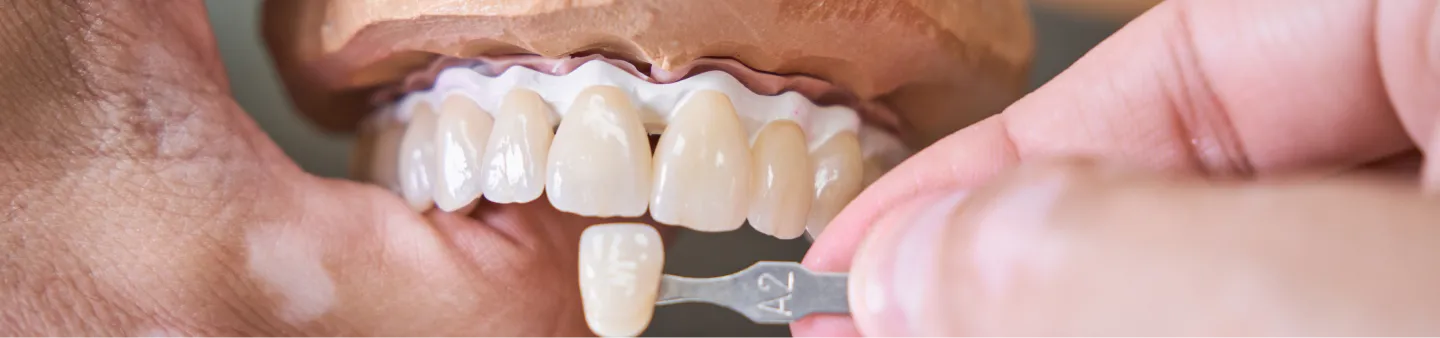
Dental inlays and onlays in North Haledon, New Jersey, restore teeth with moderate decay or fractures while preserving healthy structure. At Parkview Dental & Prosthodontics, these custom, lab-made restorations fill the space between a simple filling and a full crown. This page reviews when they are recommended, the materials involved, how the visits work, and what to expect before and after treatment.
Dental Inlays and Onlays Explained
A dental inlay is a custom restoration that fits within the grooves of a tooth without covering the cusps. An onlay extends farther, rebuilding one or more cusps and reinforcing the chewing surface. Many patients call them partial crowns because they strengthen the tooth without removing as much healthy enamel as a full crown.
These restorations are indirect fillings, meaning they are created outside the mouth from a precise impression or digital scan, then bonded to the tooth. Common materials include porcelain or other ceramics for natural esthetics and stain resistance, composite resin for conservative bonding and easy repair, and in certain cases gold for exceptional durability. Choosing ceramic vs composite depends on factors like bite forces, appearance goals, and the location of the tooth.
Inlay vs onlay selection is based on how much of the tooth is weakened. Inlays work well for larger cavities contained between the cusps. Onlays are preferred when a cusp is cracked or thin and needs coverage to distribute biting forces. They are often recommended to replace failing large fillings, restore cracked cusp teeth, and strengthen teeth after root canal therapy when a full crown is not yet necessary for patients in North Haledon, New Jersey.
Why Consider Inlays and Onlays?
Quality care tailored to your needs.
- Preserves healthy tooth structure compared with a full crown.
- Provides a precise fit and strong seal to help reduce recurrent decay.
- Restores strength to weakened cusps and improves chewing comfort.
- Matches tooth color for a natural look, especially with porcelain.
- Creates smooth contours that are easier to keep clean at the gumline.
Have Questions? We're Here to Help.
Our team is happy to discuss your options and create a plan tailored to your needs.
How Inlays and Onlays Work
The indirect filling process is completed over two visits in most cases. Here is how an inlay or onlay typically proceeds from start to finish.
- Evaluation and planning: The tooth is examined, and X-rays or scans help determine whether an inlay or an onlay is the best option.
- Tooth preparation and scan: Decay and weak enamel are removed, and a precise impression or digital scan captures the shape of the tooth.
- Temporary protection: A temporary restoration protects the tooth while the lab fabricates the custom piece.
- Laboratory fabrication: A ceramic or composite inlay or onlay is crafted to match the anatomy, color, and bite.
- Placement and bonding: The fit is verified, the tooth is cleaned, and the inlay or onlay is bonded in place and polished.
What to Expect
Local anesthesia keeps you comfortable during preparation, and most patients return to normal activities the same day. Mild temperature sensitivity can occur for a few days and usually resolves as the tooth settles. While wearing a temporary, avoid very sticky foods and chew on the opposite side when possible. After final placement, brush and floss as usual, focusing on the margins to keep them clean. With good home care and regular checkups, inlays and onlays often last for many years. A night guard can protect your restoration if you clench or grind. For questions or to plan your visit, contact Parkview Dental & Prosthodontics at 973-423-3399.
Frequently Asked Questions About Dental Inlays and Onlays
An inlay fits within the chewing surface between the cusps, while an onlay covers one or more cusps. Onlays provide extra reinforcement for weakened or cracked cusps.
The tooth is numbed during preparation and placement, so you should feel pressure but not pain. Minor soreness or sensitivity can occur for a short time and typically improves quickly.
They are ideal for cases that are too large for a standard filling but do not require a full crown. They offer a strong, precise fit while conserving more healthy tooth structure.
Ceramics blend with natural enamel and resist stains and wear. Composite resin bonds well and can be easier to repair. dentist will help choose the best option for your tooth and bite.
With daily brushing, flossing, fluoride toothpaste, and routine checkups, many inlays and onlays last for years. Avoid chewing hard objects and consider a night guard if you grind your teeth. If you would like to discuss dental inlays and onlays in North Haledon, NJ, or schedule with Dr. Sebu Idiculla, contact Parkview Dental & Prosthodontics at 973-423-3399.
Take the Next Step Toward a Healthier Smile
Contact Parkview Dental & Prosthodontics today. Our team looks forward to helping you achieve the smile you deserve.